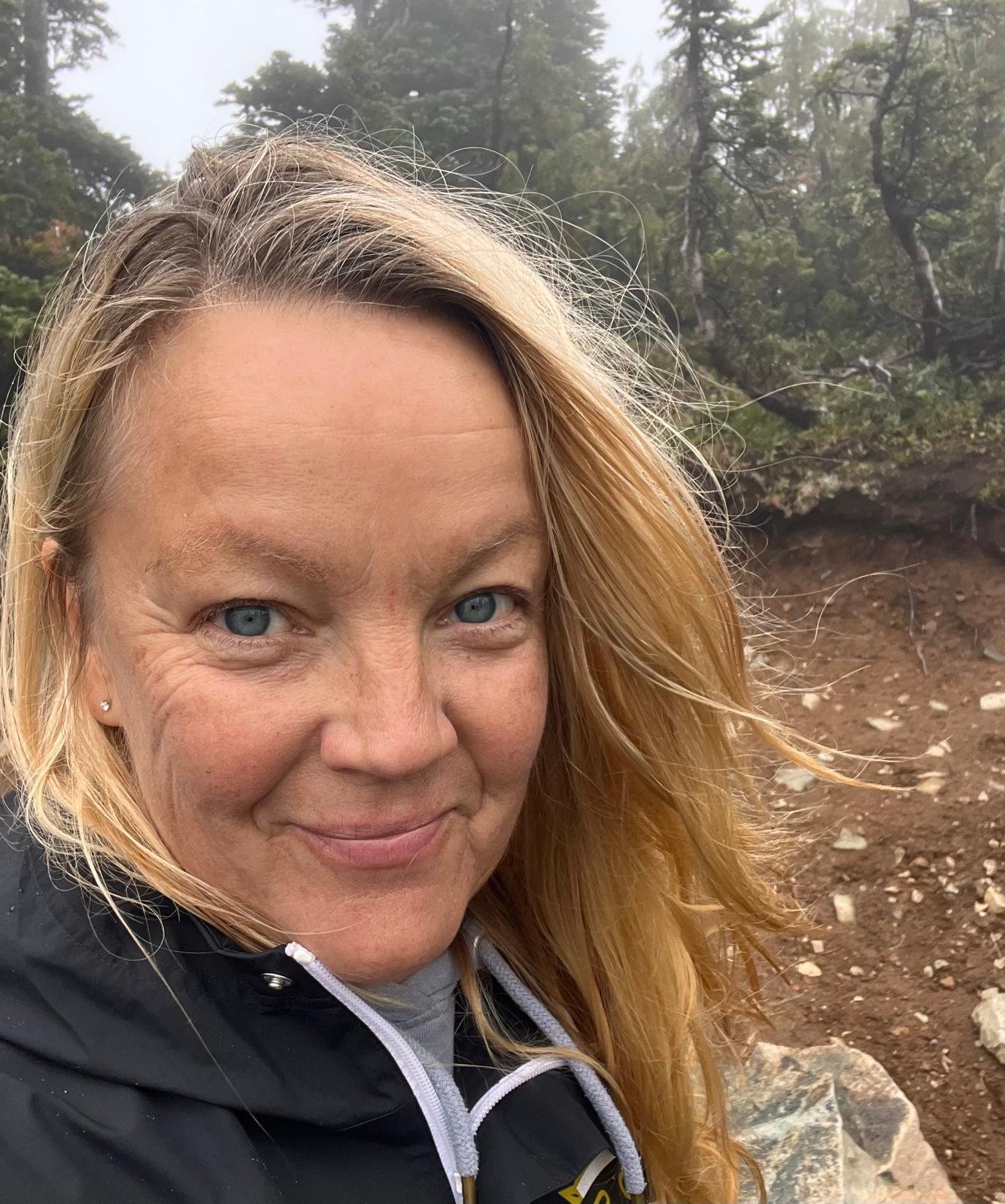
Interview with Anders Johansson Drugge – In-Country Expert for Sweden: Land of Light and Stillness - Enduring Ideals of Democracy
We’re delighted to introduce Anders Drugge, one of our key cultural guides and partners on the ground. Anders brings a deep, grounded understanding of Swedish history and contemporary identity.
Interviewer: Cilla Utne, CEO of Cross Cultural Journeys
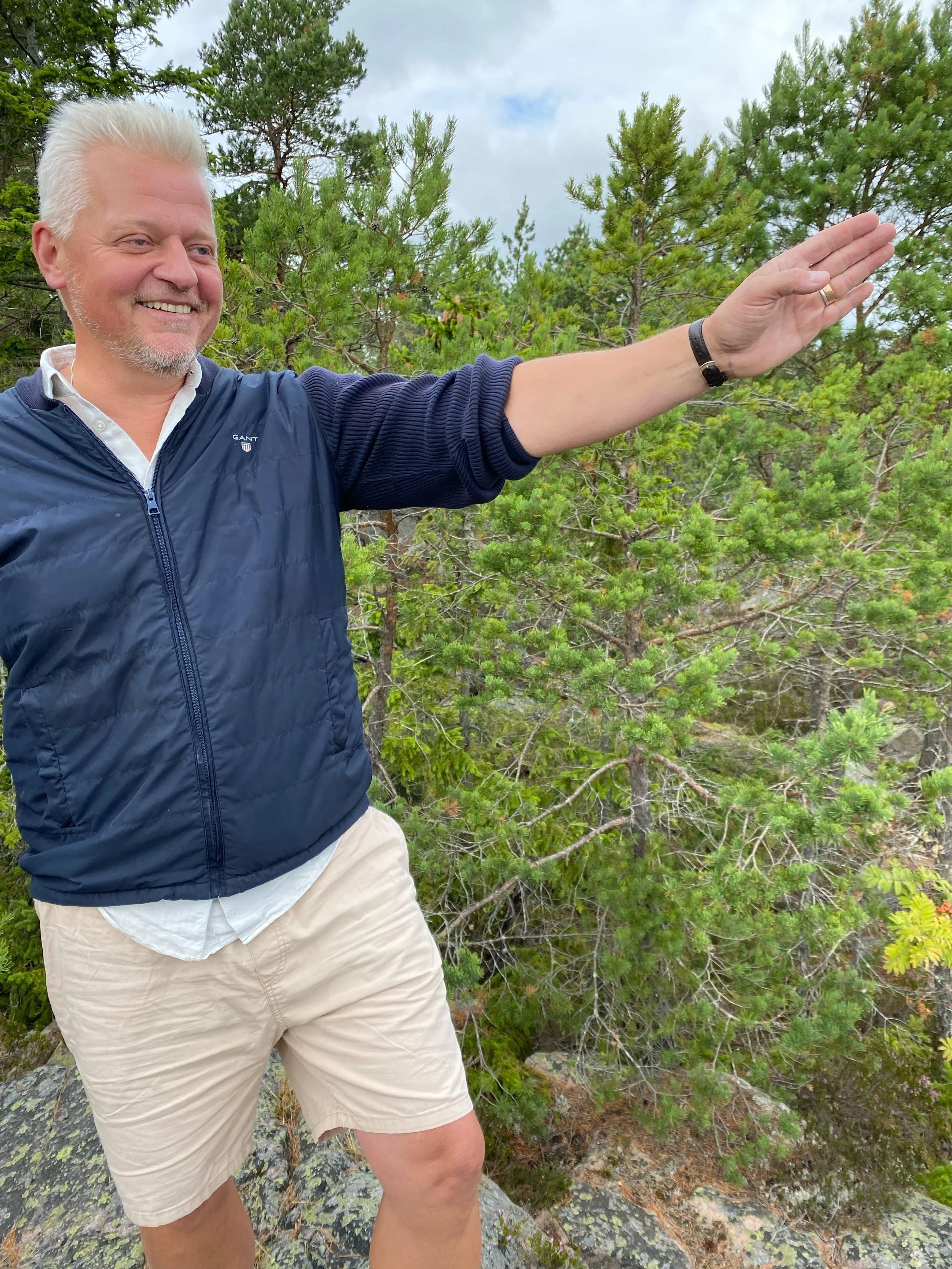
Anders in his element in Väddö Roslagen, pointing in the direction of Finland.
Cilla: Anders, we’re thrilled that you’ll be our in-country expert and guide for the entire Sweden journey. Before we get into your professional background, can you take us back to where your story actually begins?
Anders: Sure. I grew up in Älmhult, right in the middle of the southern Swedish forests. We lived in town, but most autumn and winter weekends were spent on my father’s childhood farm. It was the kind of place where the trees feel older than the family. Interestingly, almost all of my father’s relatives emigrated to Illinois, Minnesota, and Montana in the late 1800s—so we were the few who stayed.
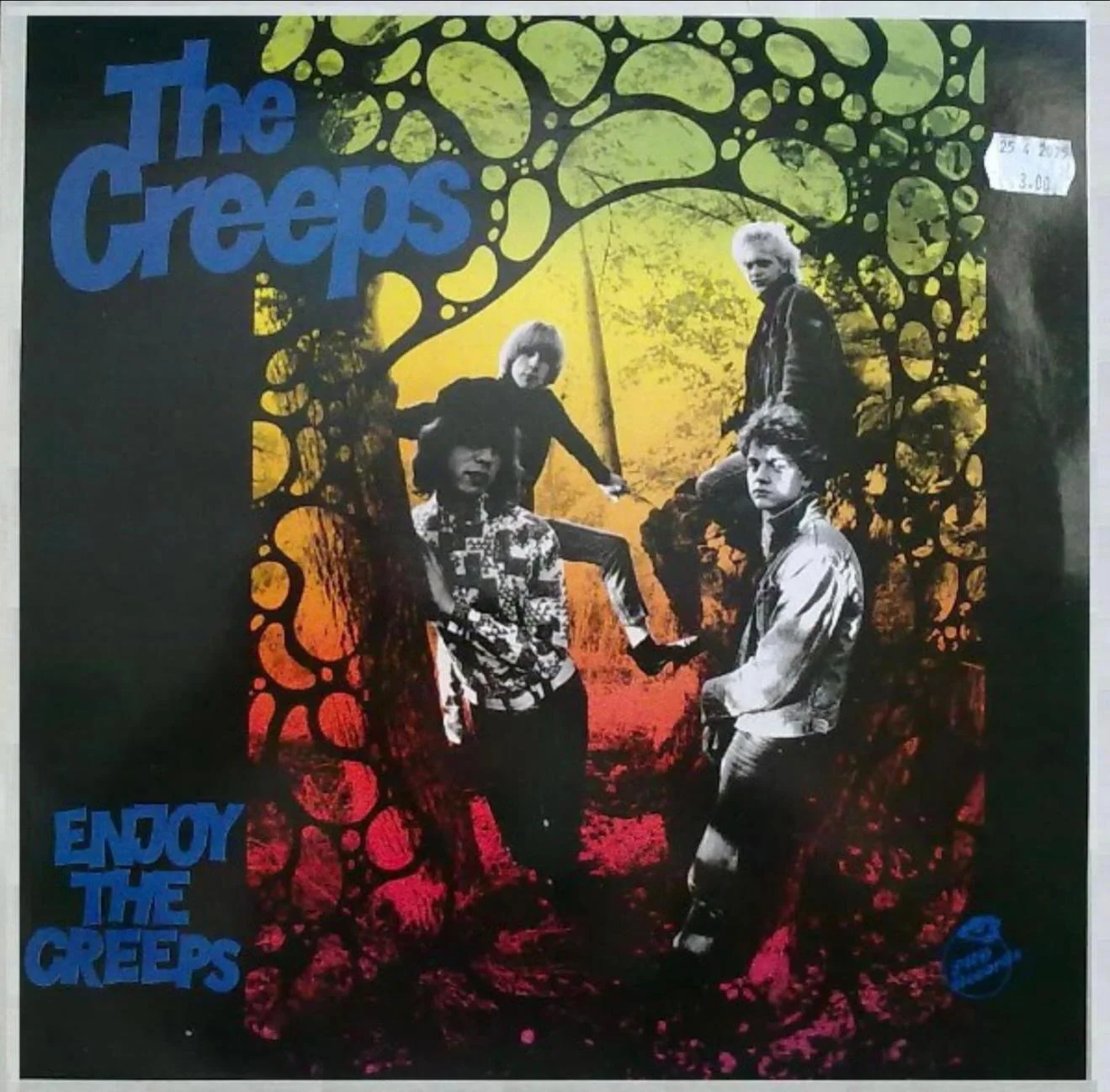
The Creeps circa 1985.
Cilla: Forests on one side—what was on the other? We will be traveling in Sweden with you in late summer. What were your childhood summers like?
Anders: Every summer my mother and I lived at our cottage outside Båstad on the west coast. That’s where I learned to love the sea. So I grew up with both—the dark, quiet forests and the bright, salty coastline. That combination shaped everything in me. Being outdoors, hunting, fishing, picking berries and mushrooms—it wasn’t a hobby. It was just life. And honestly, it still is.
Punk Rock, The Creeps, and the Unexpected Detour
Cilla: You have this deep, earthy, nature-rooted upbringing—and then, suddenly, punk rock enters your life. How did that happen?
Anders: (laughs) It was the classic teenage rebellion. I discovered punk and alternative culture, and some friends and I started a band called The Creeps. A few years later—between military service breaks—we unexpectedly became one of Sweden’s biggest bands in the early 90s. It was wild. You can Google it.
Cilla: That is not the direction one expects after mushroom picking in Småland.
Anders: No, but that’s the fun of it.
A Life Rebuilt in Småland: Family, Farming, and Three Kids
Cilla: At what point did your life shift from band tours to something a bit more… grounded?
Anders: In 1995 our first child, Olle, was born, and suddenly “grounded” sounded like a great idea. Maria and I wanted space, nature, and a slower rhythm. We were choosing between Dalarna and Småland, and ended up in a very cheap farmhouse in Agunnaryd—the “A” in IKEA.
That’s where we really went full country. We grew most of our own food, kept hens, rabbits, bees, and I hunted and fished. During those years, two more children—Åke and Stina—arrived. It was crowded, chaotic, broke, and absolutely perfect.
From Punk Stage to Manor House Host
Cilla: How does someone go from punk musician to running courses at a manor house?
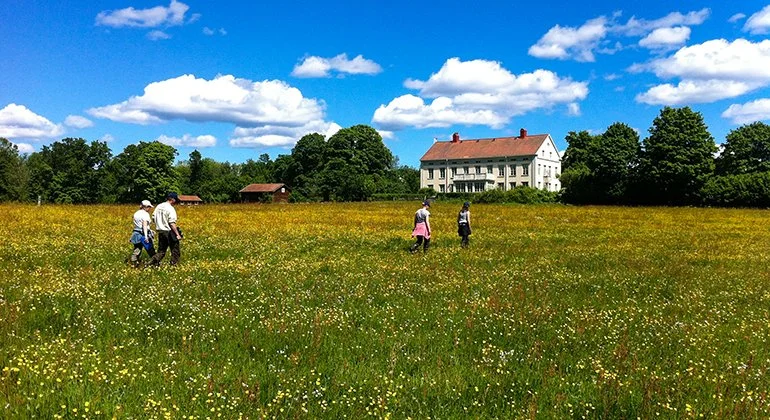
Osaby Manor
Anders: (laughs) By needing a job. I started working for Studiefrämjandet in adult education—music and theatre, but also nature and environmental programs. That led me to Osaby Säteri, an old manor south of Växjö. Eventually the lease opened up, and we grabbed it. For ten years we ran a hostel, banquet hall, and conference center there.
Cilla: Did history become part of that life?
Anders: Completely. Osaby dates back to the 13th century, and guiding visitors through its stories let me indulge my passion for history every single day.
A Late Academic Turn and the World of Care Work
Cilla: At some point, you made a pretty unexpected shift into behavioral science.
Anders: Yes, around 2010 I decided it was time to get a real education. So I studied behavioral science at university and trained as a psychiatric nursing assistant while working in healthcare. Since then, I’ve worked as a manager in different care organizations. Today I’m Operations Manager at Move & Walk, working with children who have congenital or acquired brain injuries.
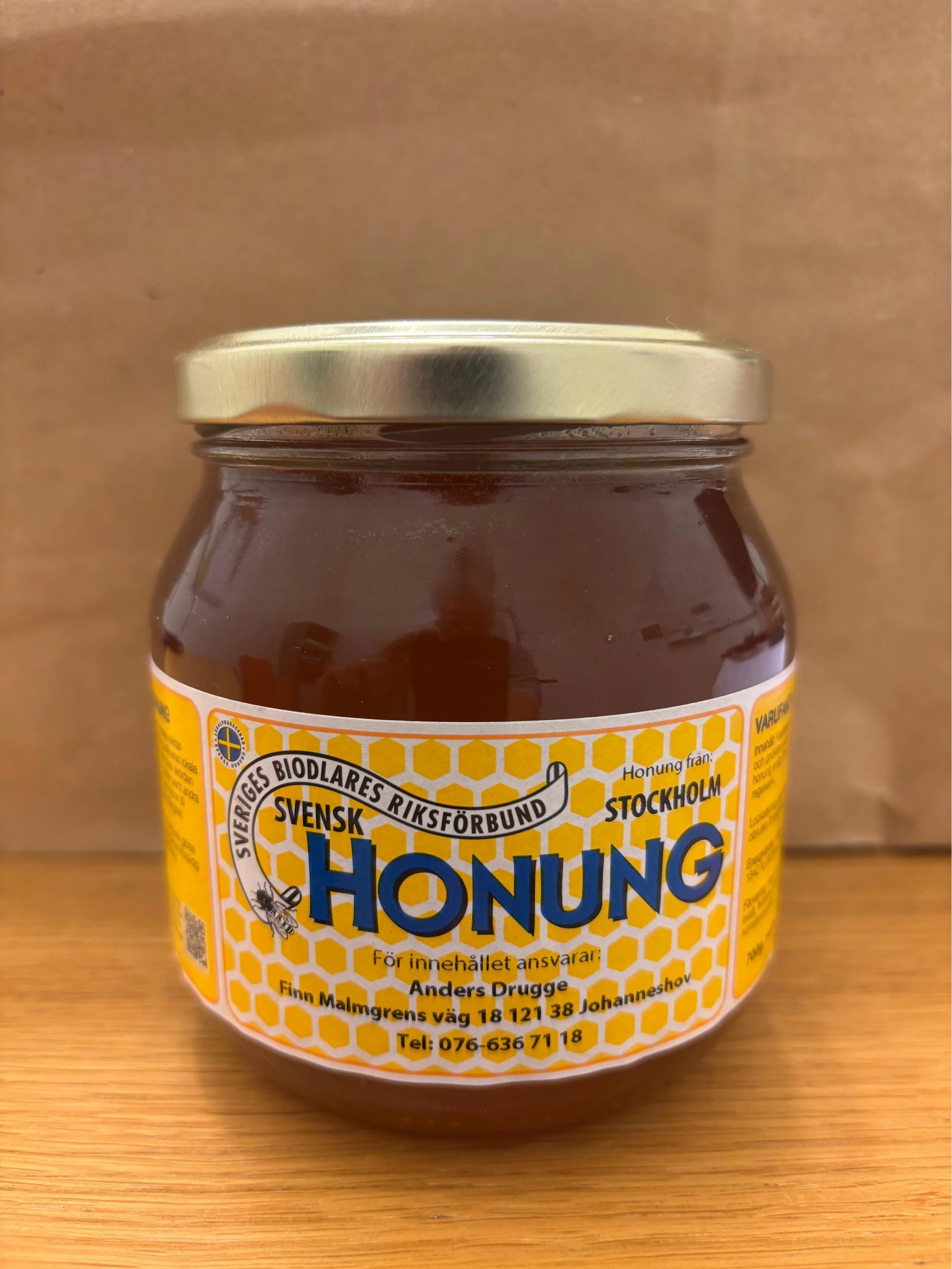
Anders is a beekeeper and makes his own honey.
Islands, Dogs, Beekeeping, and the Return to Stockholm
Cilla: And now you’re back in Stockholm—but not without a few interesting detours.
Anders: We moved to the archipelago in 2020—Väddö, as far east as you can go without floating into Finland. Later we missed city life, so now we live in Hammarbyhöjden. But nature is still everywhere in our lives. We have three Drever hunting dogs—one of Sweden’s national breeds—and I keep urban beehives. I also have a sailboat in the archipelago for when I need fresh air.
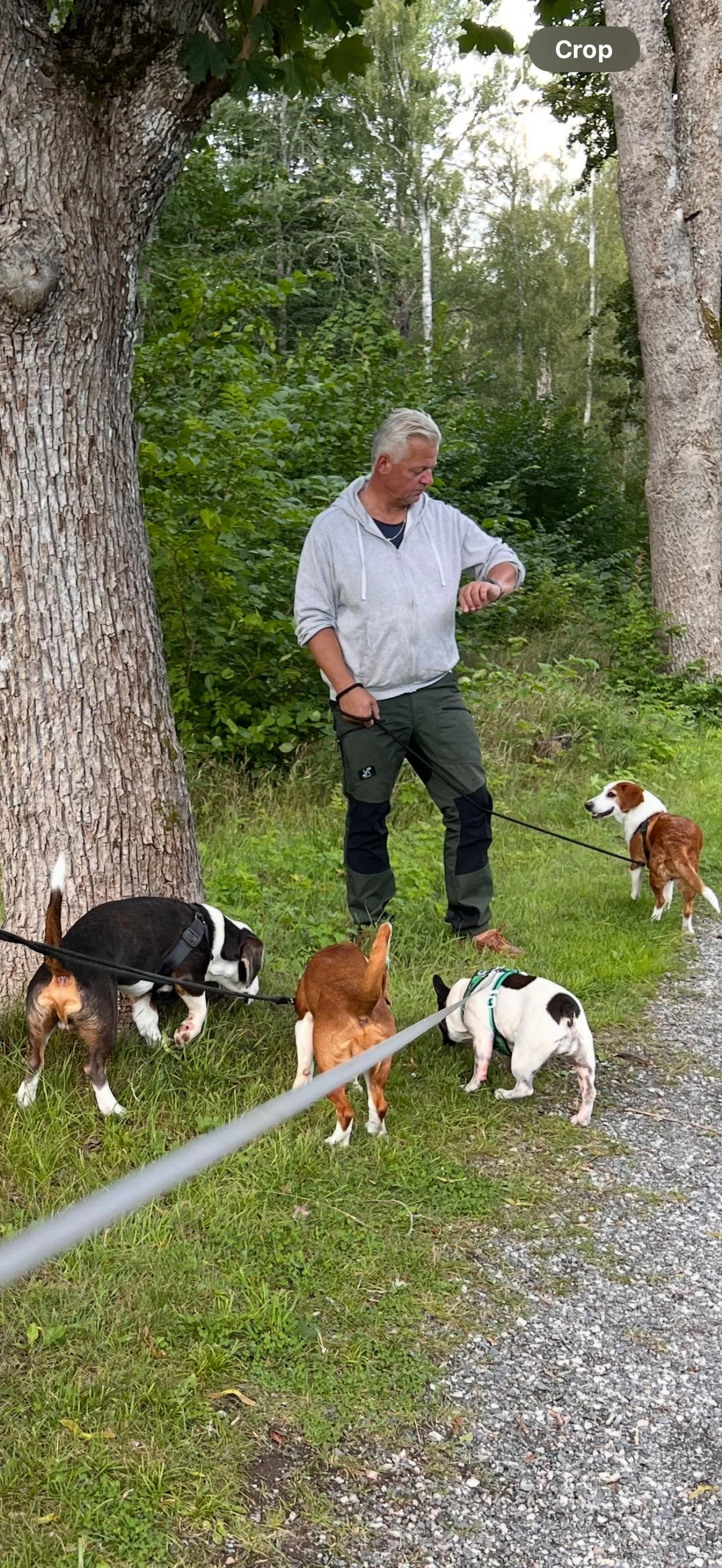
Anders with his purebreds, Bosse, Ninni, and Doris, and Cilla’s Frenchie Lola.
Cilla: And Maria?
Anders: She runs Drugge Jewellery, with her shop and studio on Kindstugatan in Stockholm’s Old Town. We will definitely pay her a visit when we are doing our walking tour of this incredible and historic part of Stockholm. I hear she may have some special items on sale for our group!
The Historian at Heart
Cilla: You mentioned earlier that history has always pulled at you. Are there certain eras you’re especially drawn to?
Anders: Yes—several transformative periods:
The Migration Period (3rd–5th centuries)
The shift from paganism to Christianity (10th–13th centuries in Scandinavia)
The Enlightenment and Industrialization (1780–1850)
And the European Bronze Age, which connects beautifully to archaeology
Every place I’ve lived, I’ve explored its local stories. They connect everything—landscape, culture, and people.
Cilla: Anders, your path—from forests to punk rock, from self-sufficient farming to manor tours, from behavioral science to beekeeping—is extraordinary. We are incredibly lucky to have you guiding our travelers through Sweden.
Anders: I’m really looking forward to it.